Akamai Report: Microsegmentation Means Faster Incident Response, Lower Insurance Premiums for Organisations
APAC Surpasses Global Average with 38% Microsegmentation Adoption Rate

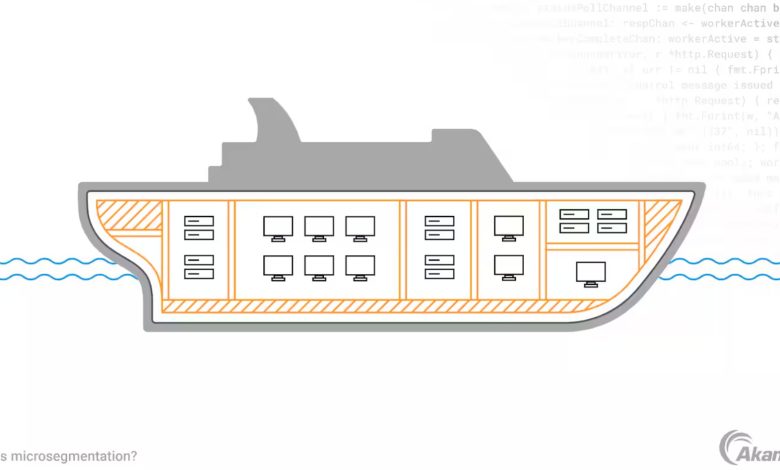
Akamai Technologies, the cybersecurity and cloud computing company that powers and protects business online, today released a new report, The Segmentation Impact Study: Why Microsegmentation Now Defines Enterprise Cybersecurity, Risk, and Resilience. The report, which surveyed 1,200 security and technology leaders worldwide, found that microsegmentation reduces ransomware containment time and improves cyber insurance position. This has led to half of non-adopters planning implementation within two years, while two-thirds of current adopters expect to increase their investment.
“Enterprises in Asia-Pacific are racing to keep up with an evolving and fragmented regulatory landscape, compounded by tougher cyber insurance requirements and increasingly sophisticated attackers,” said Reuben Koh, Director of Security Technology & Strategy for APJ at Akamai. “Recent breaches at major Asian manufacturers highlight how a single disruption in Asia can ripple across global supply chains, disrupting industries and everyday life. This is where microsegmentation makes a real difference—it stops attacks in their tracks before they spread, helps organisations demonstrate compliance, improve their standing with insurers, and ultimately lets businesses focus on their work without the constant worry of disruption.”
Adoption of Microsegmentation
While 90% of organisations have adopted some form of segmentation, only 35% have implemented microsegmentation across their network environment. This gap between intent and execution leaves many enterprises exposed to cyber threats. In the Asia-Pacific region and Japan (APAC), adoption is slightly above the global average at 38%, while China stands out as the leader, with around half of national enterprises already implementing microsegmentation. APAC enterprises are mostly cloud-native from the outset, making it easier to implement workload-level controls.
Fortunately, half of non-adopters plan to implement microsegmentation within two years, while more than two-thirds (68%) of current adopters expect to increase their investment.
Organisations that responded to the survey identified the following key drivers when adopting microsegmentation:
-
Ransomware attacks: 79% of organisations have experienced at least one ransomware attack in the past 24 months. Of the organisations that have adopted microsegmentation, 63% did so to help contain ransomware attacks and prevent spread across the network.
-
Protect critical assets: 74% of organisations are adopting microsegmentation to isolate their high-risk assets from potential threats.
-
Safeguard against internal threats: 57% aim to protect their systems from insider threats, whether malicious or accidental, through microsegmentation.
-
Meet regulatory requirements: 57% are adopting microsegmentation to comply with regulatory standards and avoid potential penalties.
-
Faster incident response: 56% want to respond more quickly and effectively to security incidents by implementing microsegmentation.
The report also found that security organisations with more than USD $1 billion in annual revenue that have implemented microsegmentation reported that ransomware containment time was reduced by 33%, accelerating time to mitigation.
Microsegmentation’s Role in Cyber Insurance
Cyber insurance is also becoming a must-have in today’s threat landscape. While it does not replace a comprehensive security strategy, it helps organisations recover financially after a breach or ransomware attack and encourages stronger defences with smarter risk management. In APAC, insurers have tightened requirements before underwriting, especially following high-profile breaches.
Seventy-five per cent of responding organisations report that insurers now assess segmentation posture during underwriting. While insurers may stop short of explicitly mandating microsegmentation, they are expecting demonstrable evidence that organisations can protect critical systems and contain threats in the event that endpoints are initially compromised. Security teams are being audited more closely, and policies may be rejected if fundamentals are lacking.
The report also shows that organisations increasingly associate segmentation maturity with lower insurance premiums, faster claims processing, stronger audit readiness, and better ransomware outcomes. Organisations have reported that microsegmentation provides numerous benefits related to cyber insurance:
-
Simplified audit reporting: 85% of organisations find that segmentation makes audit reporting easier, which in turn helps 33% reduce costs associated with attestation and assurance.
-
Lower insurance premiums: 60% of surveyed organisations have received premium reductions tied to segmentation maturity.
-
Improved claim outcomes: 74% of organisations believe that stronger segmentation increases the likelihood that their insurance claims will be approved.
Challenges of Adoption
Microsegmentation awareness is rising; however, many organisations remain stalled in the early stages of adoption. These entities still rely on legacy north–south segmentation approaches, leaving them vulnerable to growing cyberattacks and lateral movement.
Respondents cited several common challenges to implementing microsegmentation, including network complexity (44%), visibility gaps (39%), and operational resistance (32%). In spite of those hurdles, organisations that have successfully implemented microsegmentation report fewer compromised systems, lower recovery costs, and stronger business continuity.
Regulatory fragmentation across APAC adds to these challenges with varying reporting times and differing policies. For example, regulatory pressure is more acute in markets such as China, where national cybersecurity laws require extensive visibility into network traffic and data flows. In this evolving regulatory landscape, microsegmentation provides a clear path forward, enabling enterprises to isolate critical assets, respond rapidly to incidents, and produce auditable evidence that meets regulators’ standards.
Read more practical takeaways and recommendations for implementing microsegmentation effectively in the full report, and learn how Akamai is investing in Artificial Intelligence to help solve challenges of adoption.