Netskope Threat Labs: GenAI Data Policy Violations Surge in 2025 as Security Controls Lag Adoption
Accelerating GenAI Usage Leading to More GenAI-Related Policy Violations
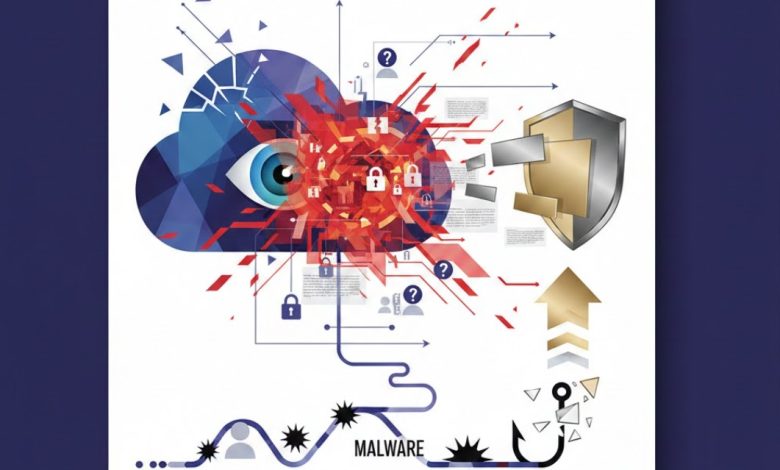
Throughout 2025, the threat researchers at Netskope Threat Labs have been monitoring Artificial Intelligence (AI), cloud, phishing, and malware threats organisations and their employees have been exposed to, and have released their analysis in their sixth annual threat report.
The volume of data policy violations occurring in the context of generative AI (genAI) usage has more than doubled year over year, with organisations detecting an average of 223 monthly attempts from employees to include sensitive data, such as regulated data, intellectual property, source code, and passwords and keys, in genAI prompts or uploads. The sustained growth in genAI adoption and the number of AI tools available are likely contributing factors.
The proportion of workers using genAI tools on a monthly basis (15%) tripled, and the number of prompts sent to genAI tools grew sixfold, from 3,000 to 18,000 prompts on average per month, reaching more than 70,000 prompts in the top 25% of organisations. The number of genAI tools tracked by Netskope Threat Labs also increased fivefold, to more than 1,600.
Compounding this issue, according to Netskope Threat Labs, is the persistence of shadow AI, with a high rate of employees still using personal genAI accounts at work (47% of AI users), over which security teams often have little to no visibility or ability to detect and prevent data leaks. Employees also use personal cloud applications extensively at work, with almost one in three (31%) uploading data every month, and 60% of insider threat incidents involving the use of personal cloud applications.
Netskope Threat Labs Finds Pressing Problem and Ways Organisations Are Addressing It
In response, organisations are deploying data protection guardrails for AI and cloud environments, but adoption is still lagging behind the threat level. Only half of organisations have deployed data loss prevention (DLP) tools to prevent sensitive data from leaking via genAI applications. In other words, half of organisations lack real-time controls that allow genAI use while preventing employees from leaking data in prompts or uploads. In addition, almost one in four (23%) do not have real-time controls able to detect or block data leaks via personal cloud applications.
Ray Canzanese, Director of Netskope Threat Labs, said: “Cloud and AI adoption are transforming organisations’ systems and employee behaviours at pace, bringing new risks and threats that have taken many security teams by surprise in their scope and complexity. It feels like many security teams are still playing catch-up, and sometimes losing sight of some security basics. It is urgent that they upgrade their policies and guardrails and expand the scope of existing tools like DLP to foster a balance between innovation and security at all levels.”
Workers’ exposure to phishing and malware remains a persistent issue. While susceptibility declined by 27% year over year, still 87 in every 10,000 employees clicked on a phishing link each month in 2025. As organisations continue to move critical systems to the cloud, attackers are prioritising cloud credential theft when designing phishing campaigns.
They rely on sophisticated tactics such as counterfeit login pages, malicious open authorisation (OAuth) applications to bypass passwords and multi-factor authentication, and brand impersonation. Microsoft is now the most spoofed brand, accounting for 52% of clicks on phishing campaigns targeting cloud services, with Hotmail (11%) and DocuSign (10%) following. Beyond cloud services, phishing campaigns targeting banking (23%) and government (21%) credentials were the top two categories triggering the most clicks by employees in the workplace.
Canzanese said: “With phishing, we have to consider that one compromised employee can lead to the compromise of the whole organisation, and thus the volume of clicks we are observing, while declining, is still quite concerning. Modern phishing campaigns are nothing like the simple email deceptions we used to see and now employ highly technical tactics that will only continue to grow in sophistication to trick employees and organisations.”
Malware Continues to Be an Issue
Netskope Threats Lab has also found that the same trend is occurring with malware, as adversaries continue to display skill in abusing channels, workflows, and environments workers inherently trust. Once again, cloud services are a major target, with attackers abusing popular cloud services to spread infected files before providers can remove them, knowing that users are less cautious and sceptical when interacting with familiar platforms. GitHub (12%), Microsoft OneDrive (10%), and Google Drive (5.8%) are the top three applications from which organisations are detecting employee exposure to malware.
Canzanese concluded: “The current threat landscape is increasingly multifaceted, and security teams have their work cut out for them if they want to keep pace. In this context, seeking bespoke security solutions for each new risk and threat has become counterproductive, and in 2026, security teams should explore broader security frameworks and the potential benefits of consolidated and unified security and data protection to simplify their security stack and its management, and effectively achieve more with less.”
More threat analyses and statistics from Netskope Threat Labs are available in the full report.