AMD Introduces EPYC™ Embedded 4005 Processors for Low-Latency Applications at Edge
Addressing Rising Demand for Real-Time Compute Performance, Extended Deployment Lifecycles in Network Security Appliances, and More

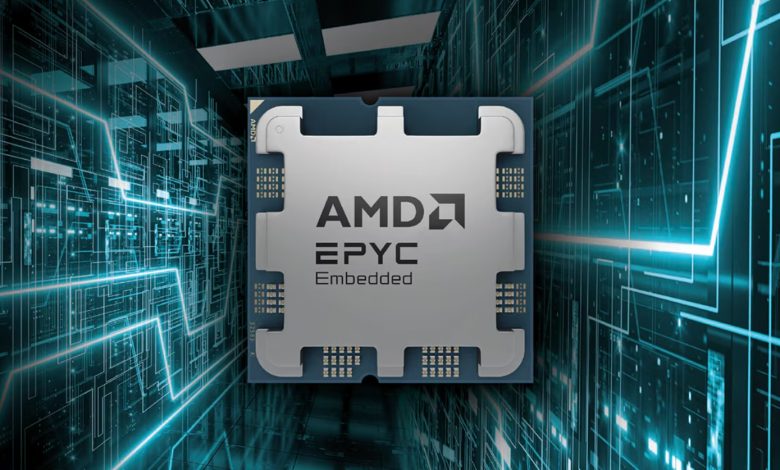
AMD has announced the EPYC™ Embedded 4005 Series processors, purpose-built to address rising demand for real-time compute performance, optimised system costs and extended deployment lifecycles in network security appliances and entry-level industrial edge servers.
Built on proven AMD server technology, AMD EPYC™ Embedded 4005 Series processors have been designed with features that address the unique demands of applications requiring low latency, efficient design, longevity, and affordability. This scalable processor family delivers leadership performance-per-watt with advanced security and connectivity features, high frequency cores with large L3 cache, and extended product lifecycles.
The high-performance AMD “Zen 5” x86 architecture integrates up to 16 cores and 32 threads in a compact 4 nm chiplet design. This processor is tailored to maximise multi-thread performance and simplify software development, enabling quicker time to market.
The device features high clock speeds and up to 128 MB of L3 cache enabling lightning-fast data management and is performance-optimised for latency-sensitive tasks like network packet processing, and industrial real-time control systems. It also supports the AVX-512 instruction set with a 512b data path that optimises efficiency and performance for Artificial Intelligence (AI) inference workloads. The configurable 65W–170W thermal design power (TDP) range allows customers to balance performance and efficiency for their specific embedded use cases, such as next-generation firewalls (NGFWs).
EPYC Series Brings Long-Term Value for Embedded Customers
Embedded solutions demand more than performance alone—they require longevity, stability, and resilience. EPYC Embedded 4005 Series processors deliver with seven years of planned manufacturing availability to ensure supply stability, built-in RAS (Reliability, Availability, Serviceability) features such as DRAM ECC, on-chip ECC/parity, and PCIe error detection to maximise runtime operation.
Ease of integration is also critical for embedded deployments, and the EPYC Embedded 4005 leverages the same AM5 socket used across multiple EPYC generations. This consistency streamlines board design and system development, enables scalability across the AMD embedded ecosystem to reduce engineering complexity, and ensures ongoing x86 software compatibility for faster time-to-market and easier long-term maintenance. The device helps developers build future-ready designs by enabling them to easily upgrade their existing solution.
Advanced Security and Connectivity
EPYC Embedded 4005 processors are engineered with the connectivity and bandwidth required for next-generation edge applications, including:
- DDR5 memory support at 5600 MT/s with 128-bit width and sideband ECC ensures high throughput and reliability.
- PCIe® Gen 5 support with 28 lanes and 11 root ports enables designers to integrate high-speed networking, storage, and accelerators with ease.
- Built-in AMD Infinity Guard security features help protect sensitive data from today’s sophisticated attacks and avoid downtime.
With the launch of the EPYC Embedded 4005 Series, AMD is expanding its commitment to embedded markets. Customers gain a platform that combines leadership performance, robust connectivity, ease of integration, and long-term support—helping them to innovate faster, simplify upgrades, and deploy with confidence.
For more information, please visit: https://www.amd.com/en/products/embedded/epyc/4005-series.html.