Check Point Security Expert Lauds Singapore’s New Digital Defence Hub as ASEAN Benchmark for Cybersecurity
Substantially Enhancing Capability-Building for Singapore's Digital Defence and Providing a Blueprint for the Rest of Southeast Asia


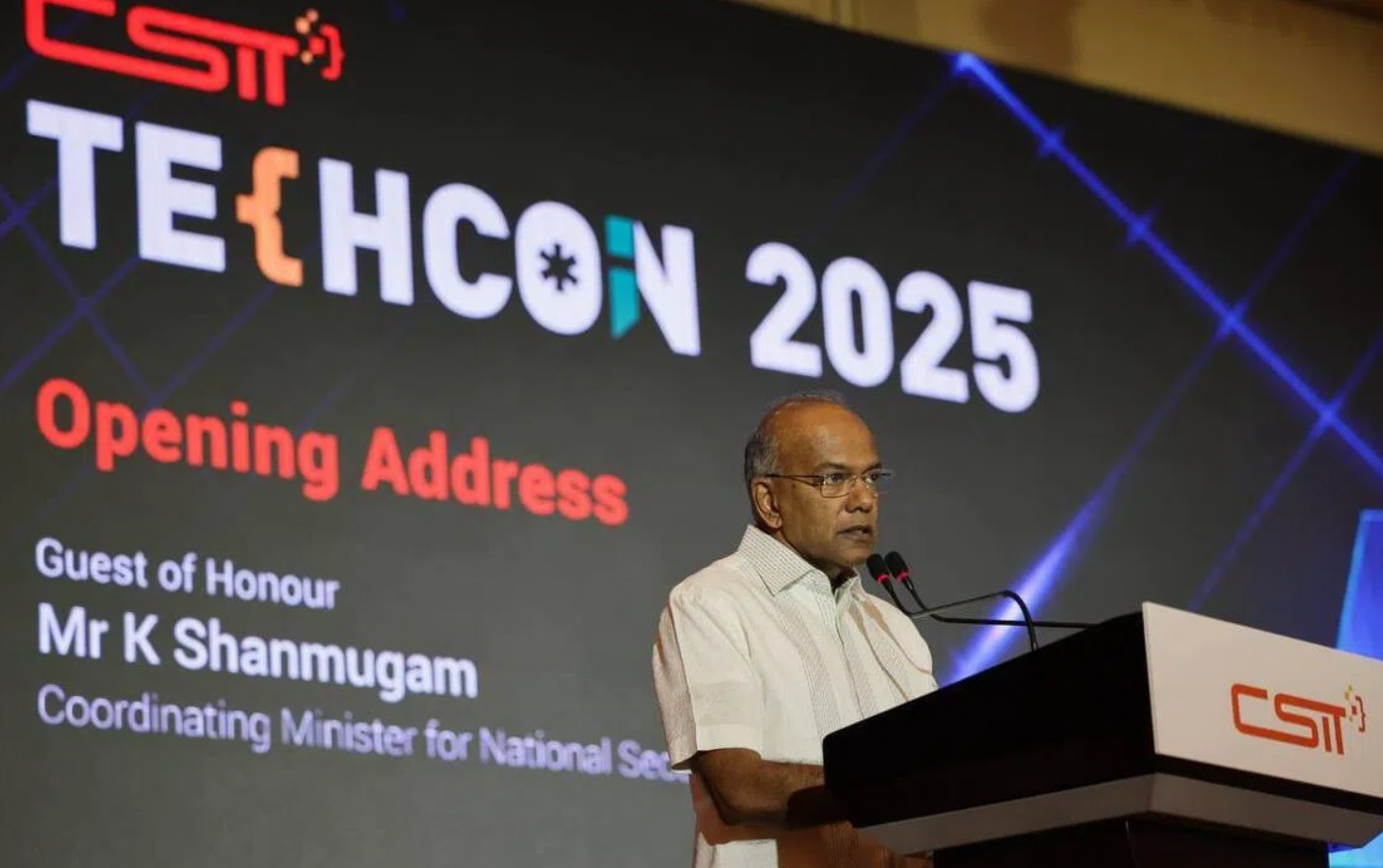
Singapore, over the weekend, launched its Digital Defence Hub (DDH), a new cybersecurity unit under the Centre for Strategic Infocomm Technologies (CSIT) of the Ministry of Defence.
“This year, CSIT is taking a very important new step. It will further substantially enhance capability-building for Singapore’s digital defence. I am pleased to announce that CSIT will be setting up a new Digital Defence Hub. The DDH will focus on developing and deploying capabilities to support a wider range of agencies,” said K Shanmugam, Coordinating Minister for National Security and Minister for Home Affairs, in a speech at the CSIT Technology Conference 2025.
“This will include capabilities that can be customised to bolster operational outcomes. It will also support a wide range of missions that are important to our national security, such as countering APTs and strengthening defences. The DDH will be a key platform that facilitates collaborations for CSIT.”
Collaboration and Capabilities of the Digital Defence Hub
Specifically, the Digital Defence Hub will collaborate with and assist government bodies such as the Cyber Security Agency (CSA) by providing technical expertise to detect and analyse advanced persistent threats (APTs) aimed at Singapore’s government systems and critical infrastructure.
It will achieve this through cyber threat research, malware analysis, proactive threat hunting to uncover hidden or ongoing cyberattacks within organisational networks, and red teaming exercises that simulate real-world cyberattacks to test system defences. These efforts aim to ensure that Singapore remains well-equipped to face increasingly sophisticated cyber threats.
A Benchmark for ASEAN Cybersecurity
The launch of the Digital Defence Hub marks a pioneering initiative, and Check Point Software Security Engineering Manager Abhishek Singh described it as a benchmark for other Southeast Asian nations in the way they approach cybersecurity.
“I believe ASEAN states can consider stepping up investment in cyber defence. Looking at Singapore’s new Digital Defence Hub, it is more than a cyber initiative but a declaration of digital sovereignty,” Singh told Cybersecurity Asia in an exclusive commentary. “By embedding cyber defence into its national security framework, Singapore signals that the digital domain is now a battlefield requiring military-grade deterrence. This sets a good regional benchmark for ASEAN to invest in intelligence-led, Artificial Intelligence (AI)-driven cyber capabilities or risk becoming soft digital corridors for adversaries.”
The Growing Urgency of Cyber Preparedness

This launch comes at a critical time. As Singh pointed out, cyber threats know no borders. An APT or ransomware attack on one ASEAN country can easily ripple through regional supply chains, financial systems, and shared infrastructure.
Recently, Check Point Research revealed that Southeast Asia experienced an average of 3,834 cyberattacks per organisation per week in the last six months—significantly higher than the 2,839 attacks recorded across Asia. These alarming figures highlight the urgency of collective cyber resilience and the need for proactive defences.
According to Singh, the cost of underinvestment in cybersecurity—ranging from data breaches and downtime to reputational damage—can be “tremendously costly compared to the investment needed to build AI-driven, prevention-first cyber capabilities today.”
Non-Negotiable Capabilities for Modern Cyber Defence
To build effective cyber resilience, Singh outlined a set of non-negotiable capabilities that modern organisations and governments must prioritise:
-
Autonomous AI Agents – SOC or endpoint agents capable of adaptive triage, ATT&CK-aligned correlation, and automated containment, powered by reinforcement learning and large language models.
-
Advanced Malware Analysis Pipelines – Hypervisor-level sandboxing, Machine-Learning code similarity, and AI-assisted reverse engineering for faster threat diagnosis.
-
Continuous Threat Exposure Management (CTEM) – Real-time asset mapping, adversary emulation, and validation frameworks aligned with MITRE ATT&CK and D3FEND.
-
AI-Augmented Threat Hunting – Integration of EDR, DNS, NetFlow, identity, and cloud data into threat graphs powered by Graph Neural Networks for early detection of lateral movement.
-
Zero-Trust and Quantum-Resilient Mesh – Secure Access Service Edge (SASE) enforcement, identity-centric segmentation, and crypto-agility compliant with NIST Post-Quantum Cryptography standards.
-
LLM/AI Workload Protection – Model firewalls against prompt injection and data leaks, ensuring dataset integrity and safe retrieval of sensitive information.
-
Identity and Credential Intelligence – Dark web monitoring, MFA-fatigue detection, and adaptive authentication to prevent ransomware staging and persistence.
Strengthening Human and Policy Dimensions
It should be noted, though, that cyber defence is as much about people and policy as it is about technology. To this end, Singh also suggested key steps that businesses and public organisations, particularly those in nations without a Digital Defence Hub, can take to strengthen their security posture:
-
Train cyber defenders continuously and collaboratively, incorporating AI in the learning process.
-
Move training from classrooms to cyber-range environments that simulate real-world APT and ransomware scenarios.
-
Adopt CTEM-based readiness audits, Breach & Attack Simulations (BAS), and frameworks like MITRE ATT&CK/D3FEND for measurable defence validation.
-
Rotate cybersecurity personnel across industries and government sectors to improve intelligence sharing.
-
Build AI-augmented defenders skilled in CTEM, threat hunting, and incident response for an integrated national cyber strategy.
As Singapore Leads, ASEAN Must Follow
Singapore’s launch of the Digital Defence Hub demonstrates a forward-thinking approach to digital sovereignty—treating cybersecurity as an essential component of national defence. The initiative not only enhances the nation’s resilience against evolving digital threats but also serves as a model for ASEAN countries to strengthen their cybersecurity ecosystems.
As the digital landscape becomes increasingly complex, the lessons from Singapore are clear: invest in people, policy, and AI-driven prevention. The Digital Defence Hub represents what every nation must aim for—a proactive, intelligence-led, and collaborative defence framework that safeguards not just infrastructure, but the very trust that underpins the digital economy.