China Attacks on Taiwan Coordinated and Intensifying, According to NSB
Forming Part of What Authorities Are Claiming to Be a Broader Cyber Threat

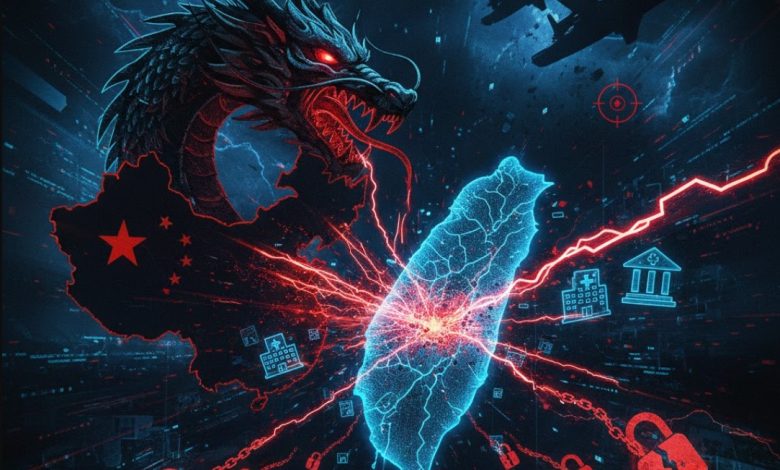
Taiwan’s National Security Bureau (NSB) has warned that China’s cyber activity targeting Taiwan has been intensifying—and not by a small margin.
According to the NSB, cyberattacks on the island’s critical infrastructure—from hospitals to banks—rose 6% in 2025, reaching a daily average of 2.63 million incidents. In some cases, these digital intrusions appeared to coincide with Chinese military drills, forming part of what officials describe as a broader hybrid threat.
The numbers are alarming, and so is the intent behind them.
Taipei has long accused Beijing of exerting pressure through a mix of military posturing and disinformation. Cyber operations, it seems, are now firmly part of that playbook. The NSB noted that the average number of daily cyberattacks in 2025 was up 113% compared with 2023, the year the agency began releasing such data publicly.
Not all sectors were affected equally. Energy systems, emergency services, and hospitals experienced the sharpest increases, a pattern that security officials say is unlikely to be coincidental. As the bureau put it, the trend points to a deliberate effort to undermine Taiwan’s essential infrastructure and, in doing so, disrupt government and social functions.
A Coordinated Attack on Taiwan?
The timing is also critical in the grand scheme of things.
Per the NSB, cyber operations often escalated alongside military and political pressure. Of the 40 “joint combat readiness patrols” conducted by China near Taiwan last year, cyberattacks intensified during 23 of them. Hacking activity also spiked during politically sensitive moments, including President Lai Ching-te’s first year in office and a high-profile meeting between Vice President Hsiao Bi-khim and European lawmakers.
In a vacuum, these incidents seem coincidental. Taken together, however, these suggest coordination rather than coincidence.
China’s tactics have ranged from distributed denial-of-service attacks, designed to disrupt daily life, to more targeted intrusions aimed at stealing data and infiltrating telecommunications networks. Particularly concerning for Taipei is the attention paid to science parks linked to Taiwan’s semiconductor industry—a cornerstone of the global supply chain.
The takeaway, according to Taiwanese security officials, is clear enough. These cyber operations are not isolated technical nuisances but part of a broader strategy, deployed in both peacetime and periods of heightened tension.
And while the attacks may be digital, their implications are very real.