Tool Fatigue Is Real—Here’s How CISOs Can Regain Control
From Having Too Few Cybersecurity Solutions to Having Way Too Many of Them

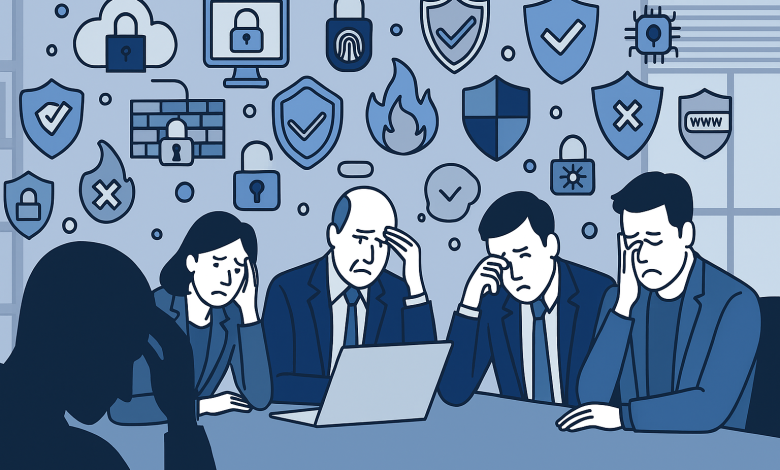
Cybersecurity leaders today face a paradox of abundance. According to a study by IBM, the average enterprise now manages 83 cybersecurity tools across a market of over 10,000 vendors. CISOs today are no longer struggling with too few solutions—but from too many. This, in turn, is leading to tool fatigue.
Every product is branded as “AI-powered.” Every platform promises “end-to-end” protection. Yet more tools don’t mean more security. In fact, the same study by IBM shares that 52% of CISOs say tool sprawl increases risk by creating blind spots, integration gaps, and operational drag. Complexity, it seems, has become the new vulnerability.
In this noisy, overcrowded landscape, even seasoned teams risk losing focus—or worse, overspending on overlapping technologies that add cost without strengthening defences.
The real question isn’t what’s new, it’s what’s necessary. How can security leaders cut through the noise and make smarter, more strategic investments? How can they avoid tool fatigue?
Here are five thought-starters to help CISOs and business leaders sharpen their decision-making and build security strategies that truly protect—not just perform.
1. Start with the risk, not the tool.
The most important question in any procurement isn’t “What can this tool do?” but “What risk are we solving?” Anchor every decision to a specific threat scenario or compliance requirement. At StarHub, we evaluate every tool through the lens of the CIA triad: confidentiality, integrity, and availability. If a solution doesn’t clearly strengthen one of these pillars, it doesn’t make the shortlist. Clarity of risk ensures that security investments are grounded in purpose, not marketing claims.
2. Contain scope creep.
Scope creep is the silent killer of cybersecurity ROI. What begins as a single-module evaluation often expands into an overbuilt, underutilised ecosystem. Be ruthless about defining the minimum viable scope. Let business value, not vendor urgency or fear, shape the roadmap. As a guiding principle: Don’t spend USD $5 to protect a USD $2 asset. Every additional layer of protection should be justified by measurable risk reduction, not theoretical threats to prevent tool fatigue and ensure optimal security.
3. Co-own architecture with the CIO.
Security and IT can no longer operate in silos. Architecture decisions must be co-designed, not retrofitted. Establish shared frameworks early, conduct joint reviews, and align on core platforms from the start. When CISOs and CIOs move in lockstep, integration improves, visibility expands, and total cost of ownership drops. A unified architecture turns cybersecurity from a cost centre into a business enabler.
4. Design for humans, not just systems.
Technology alone doesn’t secure a business—people do. Involve end users early when introducing new tools and explain why the change is necessary. Empathy reduces resistance, and design grounded in human behaviour fosters adoption and reduces shadow IT—one of the biggest and most underestimated vulnerabilities in modern enterprises. The best security design is human-centric: intuitive, empathetic, and easy to adopt.
5. Turn vendors into partners, not just providers.
In a market full of buzzwords, transparency is your best filter. Be upfront about your objectives and constraints. Ask vendors to demonstrate measurable outcomes, not just features. Hold quarterly business reviews and treat them as strategic collaborators, not transactional suppliers. The best vendors don’t just sell; they co-create, adapt, and evolve with your business needs.
Eliminating Tool Fatigue and the Way Forward
Cybersecurity leaders today must move beyond buying tools to building strategy. In a landscape flooded with options and noise, clarity is the real competitive advantage while tool fatigue is certainly detrimental.
Fewer tools and better alignment will deliver sharper insights, lower costs, and smarter outcomes. The future of cybersecurity isn’t about stacking more tools but about orchestrating the right ones. Platformisation, not proliferation, is the path forward to resilience.