Google Pioneers Agent Payments Protocol, Sets Global Standard for Secure, AI Agent-Led Payments
Key Ecosystem Players in Southeast Asia, including Airwallex, Fiuu, Garena, Lazada, Manus, Razer, Shopee, and ZALORA, Are Collaborating with Google to Shape the Future of Agentic Payments
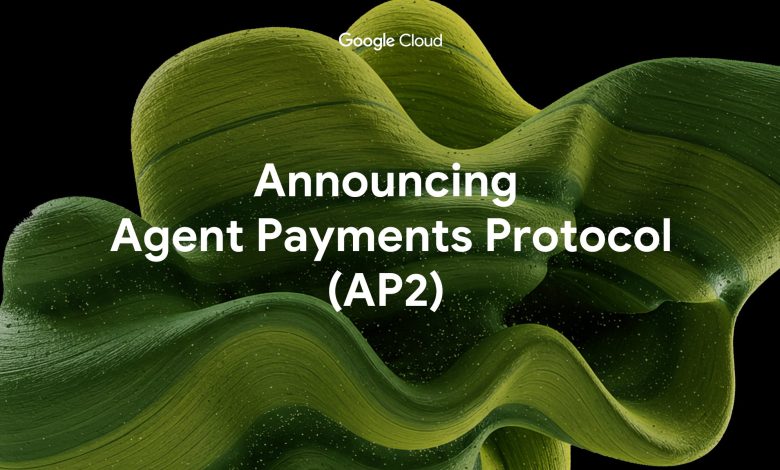
Google Cloud has announced the Agent Payments Protocol (AP2), an open protocol developed with leading payments and technology companies to securely initiate and transact agent-led payments across platforms.
Agent Payments Protocol can be used as an extension of the Agent2Agent (A2A) protocol and Model Context Protocol (MCP). In concert with industry rules and standards, it establishes a payment-agnostic framework for users, merchants, and payments providers to transact with confidence across all types of payment methods.
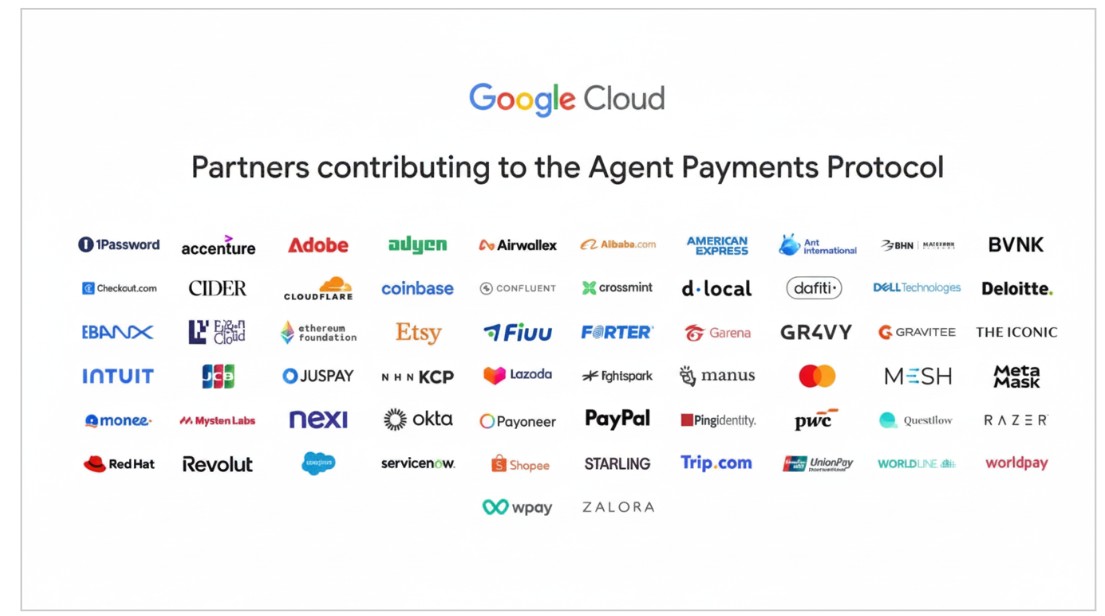
With Agent Payments Protocol, Google Cloud is now collaborating with a diverse group of more than 60 organisations to help shape the future of agentic payments, including leading Southeast Asia ecosystem players Airwallex, Fiuu, Garena, Lazada, Manus, Razer, Shopee, and ZALORA, and international players like Adyen, American Express, Ant International, Coinbase, JCB, Mastercard, MetaMask, PayPal, Trip.com, UnionPay International, Worldpay, and more.
Why Is a Protocol Needed?
Artificial Intelligence (AI) agents are capable of transacting on behalf of users, which creates a need to establish a common foundation to securely authenticate, validate, and convey an agent’s authority to transact. While today’s payment systems generally assume a human is directly clicking “buy” on a trusted surface, the rise of autonomous agents and their ability to initiate a payment breaks this fundamental assumption and raises critical questions that Agent Payments Protocol helps to address, including:
- Authorisation: Proving that a user gave an agent the specific authority to make a particular purchase.
- Authenticity: Enabling a merchant to be sure that an agent’s request accurately reflects the user’s true intent.
- Accountability: Determining accountability if a fraudulent or incorrect transaction occurs.
Rao Surapaneni, Vice President and General Manager, Business Applications Platform, at Google Cloud, said: “AP2 is an open, shared protocol that provides a common language for secure, compliant transactions between agents and merchants, helping to prevent a fragmented ecosystem. It also supports different payment types—from credit and debit cards to stablecoins and real-time bank transfers. This helps ensure a consistent, secure, and scalable experience for users and merchants, while also providing financial institutions with the clarity they need to effectively manage risk.”
Jacob Dai, Co-Founder and Chief Technology Officer at Airwallex, said: “Google’s AP2 is a critical step forward in building a secure, interoperable ecosystem for agentic AI payments. This protocol gives businesses and consumers the confidence to delegate tasks to AI agents, aligning with Airwallex’s mission to build the future of finance by empowering businesses globally.”
Eng Sheng Guan, Chief Executive Officer at Fiuu, said: “As agentic commerce reshapes payments infrastructure, Fiuu supports open protocols like A2A and AP2 to enable secure, scalable agent-to-agent transactions across multi-channel systems, advancing interoperability, trust, and inclusive payment ecosystems.”
Pablo Fourez, Chief Digital Officer at Mastercard, said: “Mastercard is committed to ongoing, responsible innovation, and we’re excited to be collaborating with Google, leading banks, merchants, AI platforms, and other industry leaders to help shape the future of agentic commerce. These efforts include critical work with standards bodies, such as the FIDO Alliance, where we’re advancing verifiable credentials to capture and secure consumers’ intent in this dynamic new context. Together, we’re playing an essential role in securing the payments ecosystem, ensuring that trust and safety remain at the core of every transaction.”
How It Works: Establishing Trust Via ‘Mandates’ and Verifiable Credentials
Agent Payments Protocol builds trust by using Mandates, which are tamper-proof, cryptographically-signed digital contracts that serve as verifiable proof of a user’s instructions. These Mandates are signed by verifiable credentials (VCs) and act as the foundational evidence for every transaction.
Mandates address the two primary ways a user will shop with an agent:
- Real-time purchases (human present): When you ask an agent, “Find me new white running shoes,” your request is captured in an initial Intent Mandate. This provides the auditable context for the entire interaction in a transaction process. After the agent presents a cart with the shoes you want, your approval signs a Cart Mandate. This is a critical step that creates a secure, unchangeable record of the exact items and price, ensuring what you see is what you pay for.
- Delegated tasks (human not present): When you delegate a task like, “Buy concert tickets the moment they go on sale,” you sign a detailed Intent Mandate upfront. This mandate specifies the rules of engagement: price limits, timing, and other conditions. It serves as verifiable, pre-authorized proof that can allow the agent to automatically generate a Cart Mandate on your behalf once your precise conditions are met.
In both scenarios, this chain of evidence culminates in securely linking a user’s payment method to the verified contents of the Cart Mandate. This complete sequence—from intent, to cart, to payment—creates a non-repudiable audit trail that answers the critical questions of authorisation and authenticity, providing a clear foundation for accountability.
Quy Tran, Director of Engineering, at Global Fashion Group, said: “Integrating A2A and MCP into AP2 enables a modular, interoperable architecture with versioned contracts, making integration and testing straightforward.”
David Chen, Chief Product Officer at Shopee, said: “At Shopee, we see immense potential for agents to transform e-commerce, and believe that industry protocols such as Google’s AP2 will be critical to enabling this future.”
Unlocking New Commerce Experiences with Agent Payments Protocol
Agent Payments Protocol’s flexible design provides a foundation to support both simple and entirely new commercial models. Consider a few examples below, which all assume Intent Mandates have been signed on behalf of a user:
- Smarter shopping: A customer discovers a winter jacket they want is unavailable in a specific colour, so they tell their agent: “I really want this jacket in green, and I’m willing to pay up to 20% more for it.” The agent then monitors prices and availability and automatically executes a secure purchase the moment that specific variant is found, capturing a high-intent sale that would have otherwise been lost.
- Personalised offers: A shopper tells their agent they want a new bicycle for an upcoming trip from a specific merchant. Their agent communicates this information—which includes the trip’s date—to the merchant, whose own agent can respond by creating a custom, time-sensitive bundle offer that includes the bike, a helmet, and a travel rack at a 15% discount, turning a simple query into a more valuable sale.
- Coordinated tasks: A user is planning a weekend trip and tells their agent: “Book me a round-trip flight and a hotel in Palm Springs for the first weekend of November, with a total budget of USD $700.” The agent can then interact with both airline and hotel agents, as well as online travel agencies and booking platforms, and once it finds a combination that fits the budget, it can execute both cryptographically-signed bookings simultaneously.
Support for Emerging Payments Systems Like the Web3 Ecosystem
Agent Payments Protocol is designed as a universal protocol, providing security and trust for a variety of payments like stablecoins and cryptocurrencies. To accelerate support for the Web3 ecosystem, in collaboration with Coinbase, Ethereum Foundation, MetaMask and other leading organisations, Google has extended the core constructs of AP2 and launched the A2A x402 extension, a production-ready solution for agent-based crypto payments. Extensions like these will help shape the evolution of cryptocurrency integrations within the core AP2 protocol.
Marco De Rossi, AI Lead, atMetaMask, said: “Blockchains are the natural payment layer for agents, and Ethereum will be the backbone of this. With AP2 and x402, MetaMask will deliver maximum interoperability for developers and will enable users to pay agents with full composability and choice while retaining the security and control of true self-custody.”
What’s Next After Agent Payments Protocol? A Call for Collaboration
Mark Micallef, Managing Director, Southeast Asia, at Google Cloud, said: “AP2 provides a trusted foundation to fuel a new era of AI-driven commerce. This is particularly relevant for Southeast Asia, where the combined gross merchandise value from e-commerce, online travel, food delivery, transport, and online media exceeded USD $263 billion in 2024. All of this activity is anchored on the ability to initiate and complete transactions. Gross transaction value for digital payments is also growing significantly year-on-year and on track to surpass USD $2,100 billion in 2030.
Agent Payments Protocol establishes the core building blocks for secure transactions that will drive further growth, creating clear opportunities for the industry—including networks, issuers, merchants, and end users—to innovate on adjacent areas like seamless agent authorisation. We’re committed to evolving this protocol in an open, collaborative process and invite the entire payments and technology community to build this future with us.”
Many of the partners building A2A agents have extended their support to Agent Payments Protocol. This growing ecosystem will continue to make their agents available in Google Cloud’s AI Agent Marketplace, including new, transactable experiences enabled by Agent Payments Protocol. For example, enterprise companies could use AP2 for B2B applications, such as enabling autonomous procurement of partner-built solutions via Google Cloud Marketplace or the automatic scaling of software licences based on real-time needs.
To get started, visit Google’s public GitHub repository to review the complete technical specification, documentation, and reference implementations. Moving forward, this repository will be updated regularly with additional reference implementations from Google and innovations from the community to demonstrate the power and scalability of Agent Payments Protocol.