Hexnode XDR Brings Deeper Threat Intelligence, Automated Response to Southeast Asia
Enhanced Threat Analysis, Alert Prioritisation, and Automated Remediation Help Teams Investigate Threats and Take Corrective Action with fewer manual steps.


Hexnode, the enterprise software division of Mitsogo, has expanded Hexnode XDR with new capabilities for threat detection, alert prioritisation and remediation, alongside support for macOS. The enhancements address a persistent challenge for security teams: detecting a threat does not necessarily make it easier to resolve.
Across Southeast Asia, enterprises are placing greater emphasis on their ability to detect and respond to cyber threats. 52% of ASEAN organisations plan to increase cybersecurity spending, with investment priorities increasingly focused on detection, response and cloud security.
“We built Hexnode XDR around one complaint we heard constantly: security tools are good at telling you something is wrong, and bad at helping you do anything about it. More alerts was never the request. Fewer steps between the alert and the fix—that was the request,” said Apu Pavithran, CEO and Founder of Hexnode, during the HexCon26 opening keynote.
Delivering on that requires connecting security investigations to action on affected devices. Hexnode XDR’s native integration with Hexnode UEM brings threat detection, device intelligence and endpoint management together, helping teams contain threats and address the underlying exposure with fewer manual steps.
What’s New in Hexnode XDR’s Detection and Triage?
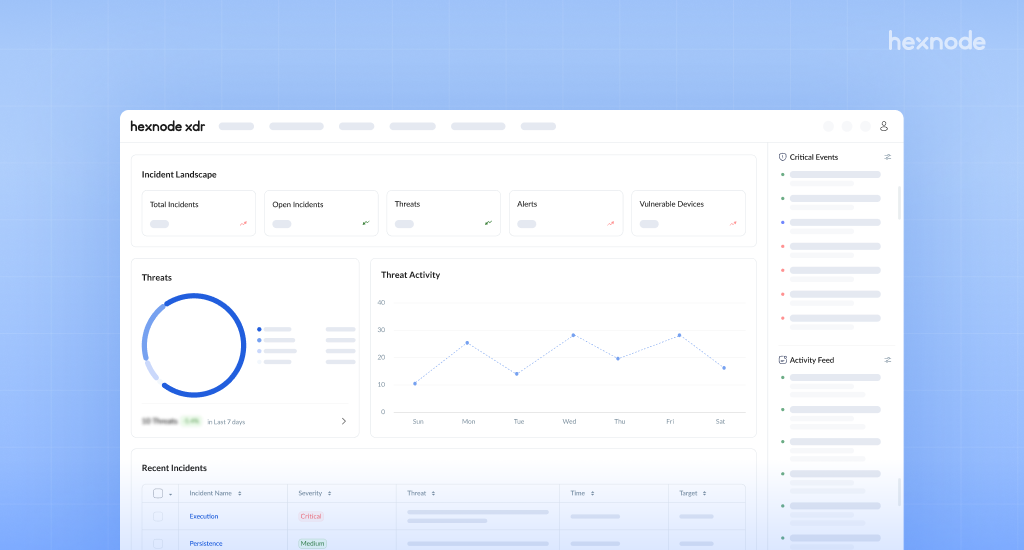
Hexnode XDR brings threat signals and supporting context into a centralised incident view, helping teams determine what happened and where attention is needed first.
The latest capabilities include:
- Integrated threat intelligence: Integrations with Mandiant (Google Threat Intelligence) and Recorded Future cross-reference endpoint activity against external threat intelligence, helping identify known threats and indicators faster.
- Sandbox analysis: Suspicious files can be examined in an isolated environment, with the results fed back into detection to provide additional context before teams take action.
- Anomaly detection: Identifies unusual activity that may not match known threat signatures, helping surface new or previously unknown attack behavior.
- Alert prioritisation: Ranks alerts based on severity and urgency so analysts can focus on higher-priority activity rather than reviewing alerts in the order they arrive.
- Asset scoring: Assigns endpoints a dynamic risk score based on defined risk parameters, helping teams identify which devices require closer attention.
- AI-assisted investigation: Hexnode Genie AI provides plain-language alert summaries to support triage. Analyse with Genie uses live incident data to explain what happened, identify what is affected and recommend a fix.
To further reduce false positives, administrators can configure exclusion policies for trusted files, applications and processes, keeping investigations focused on activity that requires review.
How Does Hexnode XDR Streamline Threat Response?
Once a threat has been identified and prioritised, Hexnode XDR provides response capabilities designed to contain the incident and address the underlying endpoint risk.
- Endpoint isolation: Enables one-click isolation of affected devices from the network while maintaining management access through Hexnode, helping contain potential threat spread while investigation and remediation continue.
- Vulnerability management: Identifies vulnerabilities and missing patches, with remediation carried out through Hexnode UEM. This connects XDR threat investigation with endpoint patching, helping teams address the security gaps uncovered during an incident.
- Automated remediation: Triggers predefined fixes based on configured rules and policies, reducing repetitive manual corrective actions.
Together, these capabilities connect detection with containment and follow-up remediation rather than leaving teams to coordinate each stage through separate workflows.
To keep key security information visible, custom dashboards allow teams to tailor their view to their role and monitoring priorities. Integrations with Splunk and QRadar also connect Hexnode XDR with existing security information and event management (SIEM) systems for broader investigation and reporting.
How Is Hexnode XDR Building Towards AI-Assisted SOC Operations?
Together, alert prioritisation, asset scoring and automated remediation provide the context and response framework needed to support more AI-assisted SOC workflows, helping move security operations from identifying what matters to determining where action should be taken. Hexnode Genie AI complements this by drawing on live incident data to support investigation and response decisions.
Hexnode plans to build on this foundation with deeper AI-assisted investigation and orchestration across XDR and the wider Hexnode platform.