Okta: Singapore Organisations Struggle to Govern Growing AI Risk
Highlighting a Growing Gap Between AI Deployment and Governance Maturity

Okta, the leading independent identity partner, recently released findings from its Okta AI Security Poll, revealing that while Singaporean organisations are moving fast on Artificial Intelligence (AI) adoption, many remain unclear on who owns the associated risks, and how those risks should be governed.
The live poll, conducted in November at Okta’s Oktane on the Road event in Singapore, surveyed technology and security leaders, and highlights a growing gap between AI deployment and the maturity of governance and identity controls required to manage it effectively.
What Okta Found
The results show AI awareness and usage are accelerating, but accountability, monitoring, and identity infrastructure are struggling to keep pace.
Key findings include:
- Unclear ownership of AI risk: 53% said AI security risk sits with the CISO or security function, yet a concerning 25% reported no single person or function currently owns AI risk in their organisation.
- Limited visibility into AI behaviour: Only 31% expressed confidence in their ability to detect if an AI agent operates outside its intended scope, while 33% do not currently monitor AI agent activity at all.
- Growing blind spots: Data leakage via integrations was identified as the top security gap (36%), followed closely by Shadow AI, unapproved, or unmonitored tools (33%).
- Identity systems lagging: Just 8% said their identity systems are fully equipped to secure non-human identities such as AI agents, bots, and service accounts, with 58% describing their capabilities as only partially equipped.
- Boards aware, but not fully engaged: While 50% said their boards are aware of AI-related risks, only 31% reported full board engagement in oversight.
“Organisations in Singapore are adopting AI at speed, which signals growing maturity in how the technology is being used. We are seeing a shift from early experimentation to responsible, strategic adoption. The next step is ensuring governance and security evolve at the same pace,” said Stephanie Barnett, Vice President, Asia Pacific & Japan, at Okta.
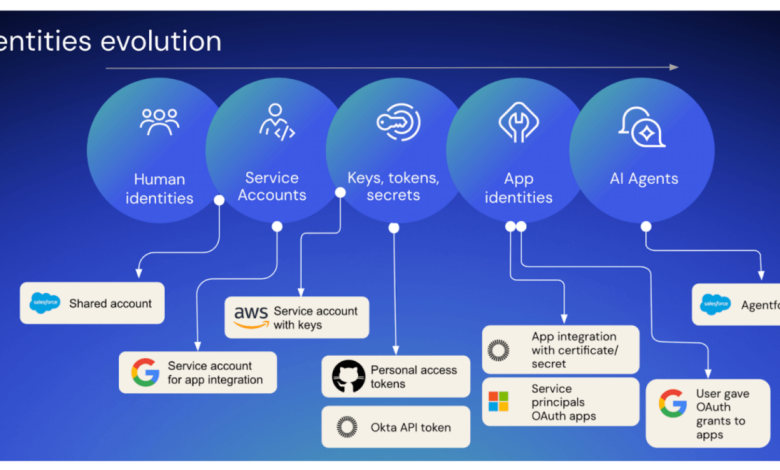
“As AI becomes more embedded across workflows, organisations need to treat AI agents like any other, and apply the same discipline to securing AI agents as they do to human users. When identity is strong, trust follows, and that is what enables innovation to scale safely and sustainably.”
The poll findings point to a critical need for clearer accountability, stronger governance frameworks, and modern identity systems that can secure both human and non-human identities as AI becomes embedded across enterprise operations.