Singapore Battles Rising Bot Attacks Amid Cross‑Border Fraud Networks
A Digital Economy Dominated by Mobile Transactions That Is Increasingly Targeted by Bots, and Deeply Enmeshed in Global Fraud Networks


Based on the recently released LEXISNEXIS® RISK SOLUTIONS Cybercrime Report, Singapore’s cybercrime profile in 2025 tells a story of resilience under pressure and lots of bot attacks.
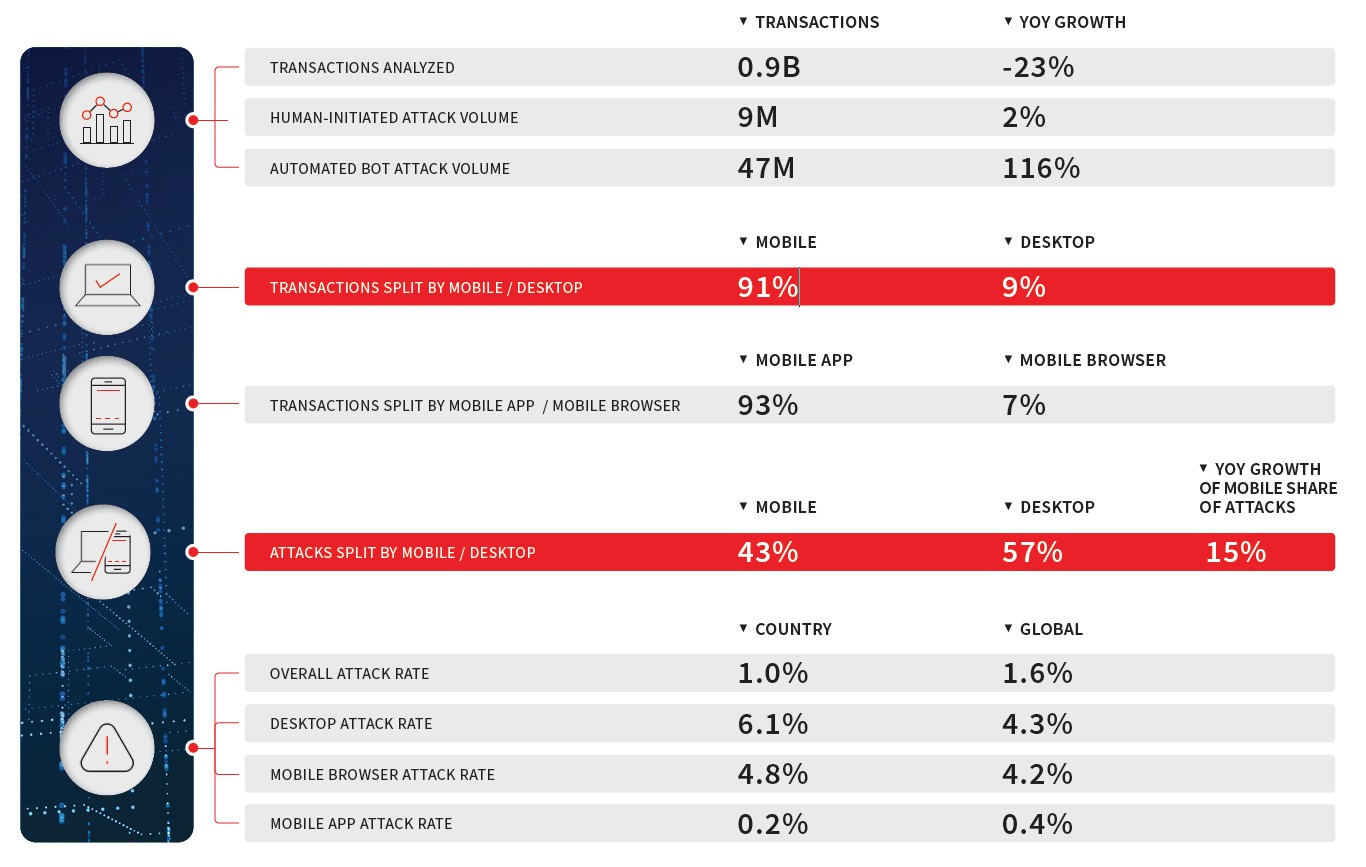
According to the report, bot attacks more than doubled in the progressive city-state, surging 116% year‑on‑year, as fraudsters targeted both ecommerce and the financial sector with increased automation. Human‑initiated attacks rose just 2%, but the sheer scale of automated assaults drove the overall attack rate up 35% to 1%—still below the global average of 1.6%.
Transactions Under Strain
IN addition, the country’s digital economy showed uneven growth. Ecommerce transactions climbed 59%, yet reduced activity in the financial sector offset those gains, leading to a 23% decline in overall transactions. In total, 0.9 billion transactions were analysed, with 47 million automated bot attacks and 9 million human‑initiated attacks recorded.
Mobile Channels Dominate
Mobile continues to define Singapore’s digital landscape. Fully 91% of transactions were mobile, with mobile apps accounting for 93% of that share. Unlike global trends, Singapore saw a 15% increase in the share of mobile attacks relative to desktop. Desktop transactions faced a 6.1% attack rate compared with 4.3% globally, while mobile browsers recorded 4.8% against a global 4.2%. Mobile apps, however, remained comparatively resilient, with a 0.2% attack rate versus 0.4% globally.
Regulatory Response
Singapore’s role as a financial and fintech hub has prompted decisive action. The Shared Responsibility Framework, introduced in late 2024 and fully enforced in 2025, strengthened consumer protection. Among its provisions are account drainage guidelines, designed to prevent scammers from rapidly emptying victim accounts within a 24‑hour window.
Beyond Bot Attacks, Fraud Networks Cross Borders
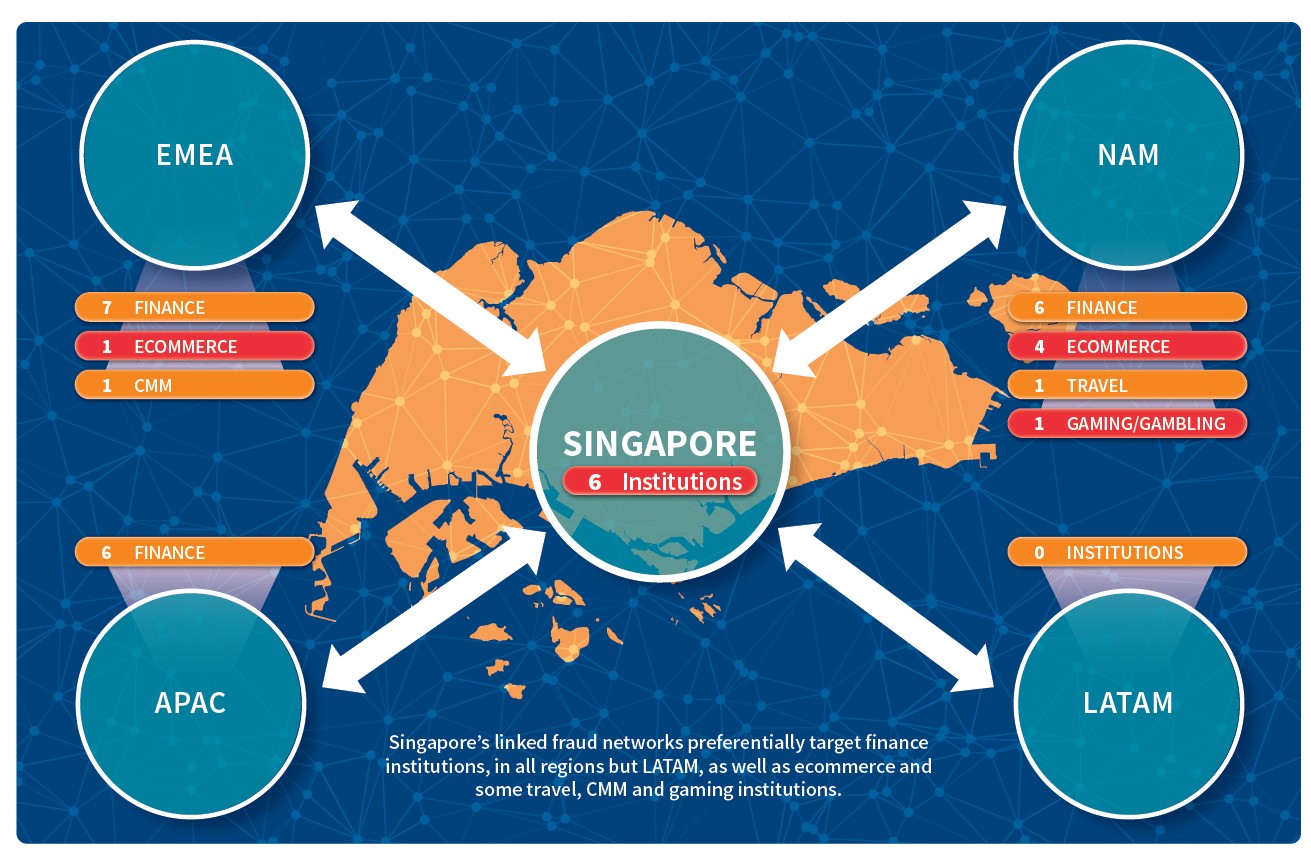
Fraud in Singapore is not confined to domestic institutions. Networked fraud, linked by digital identities, revealed significant crossover between organisations in Singapore and financial platforms in EMEA and North America.
Fraudulent identities targeted multiple banks locally, while also extending to ecommerce, travel services, telecommunications operators, and gaming sites. Finance remains the primary target across regions, with Singapore’s fraud networks preferentially attacking financial institutions in APAC, EMEA, and North America, alongside ecommerce and selected travel and gaming services.
Key Takeaways at a Glance
- Bot attacks surged. Up 116% in 2025, mainly hitting ecommerce and financial services.
- Overall transactions fell. Despite ecommerce growth (+59%), financial sector decline led to a 23% drop in total transactions.
- Attack rate rose. Overall attack rate climbed 35% YOY to 1%, still below the global average of 1.6%.
- Mobile dominance:
- 91% of transactions were mobile, 93% via apps.
- Mobile attacks grew 15% YOY, unlike global trends.
- Desktop attack rate (6.1%) was higher than global (4.3%).
Anti-Scam Measures
- Singapore rolled out its Shared Responsibility Framework (late 2024, enforced in 2025).
- Includes account drainage guidelines to stop scammers from emptying accounts within 24 hours.
Fraud Networks
- Fraud in Singapore is networked across borders:
- Linked identities target multiple banks locally.
- Extend to finance platforms in EMEA and North America, plus ecommerce, travel, telco, and gaming sites.
- Finance institutions are the primary target, followed by ecommerce and travel.
The Bigger Picture
The data paints a picture of a market under sustained automated attack, with bot attacks rising and fraud networks exploiting cross‑border linkages to strike at multiple sectors simultaneously.
Singapore’s frameworks and anti‑scam measures are critical in containing the threat, but the challenge is stark: a digital economy dominated by mobile transactions, increasingly targeted by bots, and deeply enmeshed in global fraud networks.