Tanium: As NVIDIA Launches NemoClaw, Governance Must Keep Pace With Agentic AI
Demanding Urgent Attention to Governance and Visibility


NVIDIA’s launch of NemoClaw at GTC 2026 will significantly accelerate enterprise adoption of agentic tooling across workforces—often ahead of the security frameworks needed to manage it safely. For enterprises across Southeast Asia, this demands urgent attention to governance and visibility.
Southeast Asia is particularly exposed. National AI (Artificial Intelligence) strategies across Singapore and Malaysia are accelerating enterprise adoption of agentic tooling ahead of the security and governance infrastructure needed to manage it. AI agents operate autonomously, act across systems at machine speed, and require minimal human checkpoints, making visibility, access control, and behavioural oversight more critical than ever.
New Risks and Less Time with NemoClaw
Agentic AI does not introduce a wholly new category of risk, but it does reduce the amount of time security teams have to catch misconfigured, unapproved, or vulnerable implementations. That is the part of announcements like NemoClaw that deserves more attention than the capability itself.
The threat surface most immediately implicated is not exotic. It is identity, credentials, and access—the same surface security teams have always struggled to manage. What changes with autonomous agents is the blast radius of a single misconfiguration. When AI systems can act at machine speed with minimal human checkpoints, a gap in access policy or credential hygiene does not stay a gap for long. We are already watching sophisticated actors move away from traditional malware towards hands-on, AI-augmented techniques that look legitimate right up until they are not. Agentic AI accelerates that playbook.
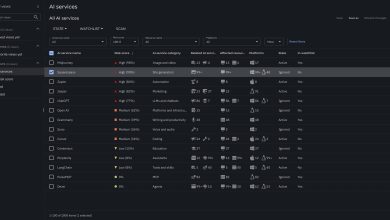
Across enterprise environments in the region, we are seeing AI and agentic tooling deployed faster than governance policies can keep up, and many organisations are often surprised to identify those artefacts in their environment. We have to get a handle on governance now because the pace of innovation and complexity will not slow down.
Is Confidence Only Perceived?
The gap I am most concerned about is not technical—it is the confidence gap between the people who understand what these systems can do and the people deciding how to deploy them. Visibility into what tools are running is necessary but not sufficient. You also need behavioural baselines to know whether those tools are acting normally. Most organisations deploying agentic AI right now have neither. Proactively establish governance and observability today—do not wait until there is a major incident.
NVIDIA’s investment in NemoClaw is a positive signal. Enterprise vendors have reputational accountability that forces security consideration into the product even when it is an open-source offering like NemoClaw. The flashpoint moments we have already seen happened partly because there was no institutional skin in the game.
My hope is that NVIDIA bakes in robust privacy and safety measures to enable adoption of, and innovation with, their agent while providing guardrails to protect users and their data. We know AI is here, and we know it is redefining the way we work at an almost inconceivable pace. The risk I am seeing is not in the tool—it is in the gap between how fast organisations will adopt it and how ready their governance and observability programmes are to absorb it.