Phishing Paradox: Trusted Brands as Cyber Criminals’ Entry Point of Choice
Exploiting the World’s Most Recognisable Brands Give Attackers an Entry Point Where Vigilance Lapses

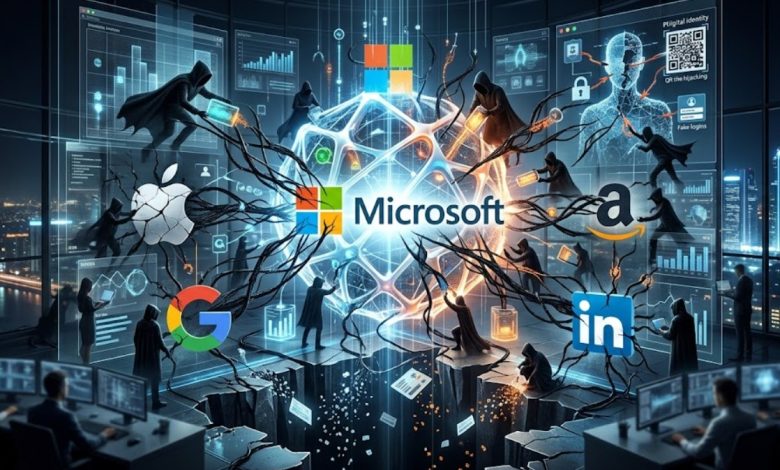
Phishing has long been the weapon of choice for cyber criminals, and in Q1 2026, the world’s most trusted brands once again bore the brunt of impersonation. Microsoft led the way, accounting for 22% of all brand phishing attempts, according to Check Point Research (CPR). The finding reinforces a troubling reality: attackers consistently exploit household names to steal credentials and gain initial access to both personal and enterprise environments.
Apple climbed to second place with 11%, reflecting the growing appeal of consumer ecosystems tied to payments, identity, and personal devices. Google followed with 9%, Amazon with 7%, and LinkedIn with 6%—a clear sign that professional identities remain a lucrative target. Together, the top four brands accounted for nearly half of all observed phishing attempts, underscoring the concentration of attacks around a small number of globally recognised platforms.
Technology Still the Prime Target
By industry, technology remains the most impersonated category in phishing campaigns. Attackers continue to focus on credentials that unlock enterprise email, cloud platforms, collaboration tools, and identity services. Social networks followed, driven by abuse of LinkedIn and Facebook, while banking stayed a perennial target for direct financial fraud and account takeover.
As digital identity becomes the backbone of both enterprise operations and everyday online activity, phishing has proven to be one of the most effective—and scalable—vectors for initial access.
Top 10 Most Imitated Brands for Phishing (Q1 2026)
- Microsoft – 22%
- Apple – 11%
- Google – 9%
- Amazon – 7%
- LinkedIn – 6%
- Dropbox – 2%
- Facebook – 2%
- WhatsApp – 1%
- Tesla – 1%
- YouTube – 1%
The continued prominence of Microsoft, Apple, and Google reflects their central role in authentication, productivity, and digital identity workflows—making stolen credentials particularly valuable to attackers.
Real‑World Campaigns Observed
- Microsoft: Subdomain abuse to harvest credentials, with fake login pages mimicking Microsoft authentication flows.
- PlayStation: Fraudulent online store offering fake discounts and requiring direct bank transfers—classic payment scam tactics.
- WhatsApp: QR code hijacking via fake web login, tricking users into linking accounts to attacker‑controlled sessions.
- Adobe: Malware delivery through fake Acrobat downloads, deploying remote access tools for full device compromise.
These examples highlight the versatility of phishing—moving beyond credential theft into fraud, account takeover, and full system compromise.
Managing Brand Phishing Risk
Brand phishing is not one problem but two.
The first: your brand weaponised against others. Attackers spin up lookalike domains, fake login pages, and fraudulent apps to defraud customers. No breach occurs in the traditional sense, but trust erodes, reputation suffers, and campaigns often run undetected for weeks. Exposure Management addresses this by scanning the external threat landscape for impersonation campaigns and shutting them down—removing fake pages and apps with a >98% takedown success rate.
The second: your employees targeted through other trusted brands. A convincing Microsoft or DocuSign prompt can trick staff into handing over credentials. Workspace Security mitigates this risk by layering controls across email, endpoints, identity, and access, ensuring that a single slip does not escalate into a full breach.
When combined, Exposure Management and Workspace Security create a prevention‑first approach. External visibility identifies compromised vendors and leaked credentials; internal protection acts immediately to limit exposure. The result is a tighter, real‑time defence against phishing campaigns from both directions.
The Bottom Line
Phishing thrives on trust. By exploiting the world’s most recognisable brands, attackers gain entry where vigilance lapses. Prevention must come first—because in the phishing paradox, the very names people trust most are the ones criminals weaponise best.