Why Fraud, Identity, and AI Now Demand Board-Level Attention in 2026, According to Recent LexisNexis Research
Becasue Cybersecurity in 2026 Will No Longer Be About Preventing Isolated Breaches But Managing Systemic Risk Driven by Fraud, Identity Abuse, and AI-Powered Threats.


Now it can be told definitively: cybersecurity has entered a new phase. This new phase is marked less by isolated breaches and more by systemic risk. This is the overriding theme of the recently released LexisNexis® Risk Solutions Global State of Fraud and Identity Report 2026, which emphasises in no uncertain terms how fraud and identity threats are no longer peripheral operational issues. Rather, they are now deeply intertwined with economic pressures, artificial intelligence, and the speed of modern digital commerce and are, as a result, forcing enterprises to rethink how trust is protected across every customer interaction.
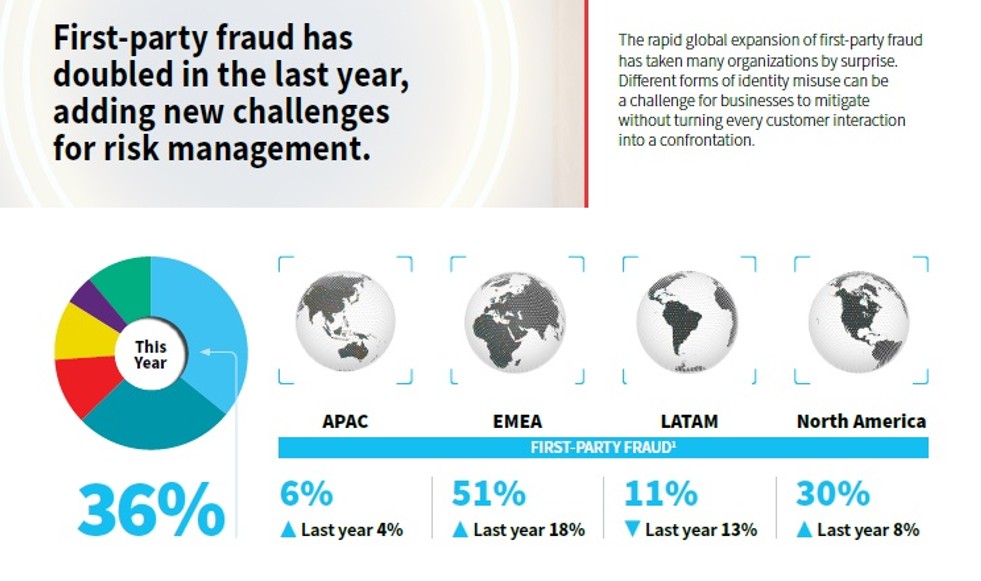
One of the report’s most consequential and compelling findings is the sharp rise in first-party fraud, which has doubled over the past year. Unlike traditional fraud, first-party fraud often involves legitimate customers misusing their own identities—opening accounts, taking out loans, or participating in mule activity with no intention of repayment. The LexisNexis® Risk Solutions Global State of Fraud and Identity Report 2026 links this trend directly to rising living costs, highlighting how financial stress is becoming a material cybersecurity risk factor rather than a purely economic concern. For enterprises, in particular, this trend blurs the line between customer behaviour and criminal activity, complicating detection without eroding customer experience.
The Industrialisation of Cybercrime According to LexisNexis
At the same time, the infrastructure supporting cybercrime has matured considerably. The same LexisNexis® report details how the dark web has evolved into a sophisticated fraud-as-a-service marketplace, offering everything from aged email accounts and reward-point credentials to fully provisioned digital bank accounts and KYC packages. This commoditisation of fraud capabilities dramatically lowers the barrier to entry for attackers and accelerates the pace at which new schemes can be launched.
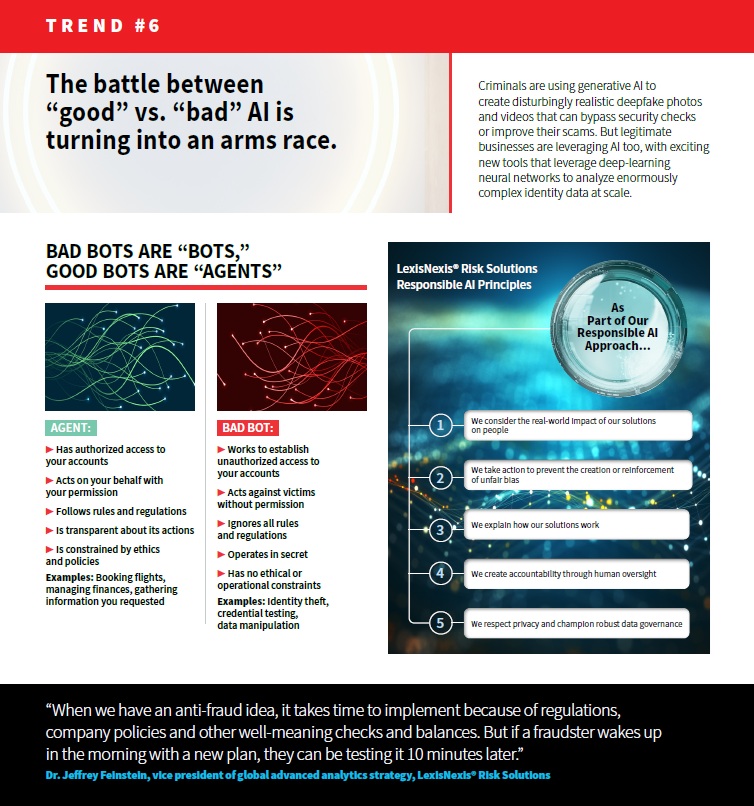
While enterprises must navigate regulatory approvals and internal controls, which are often long-winded and time-consuming, fraudsters can test and deploy new tactics within minutes. This imbalance continues to tilt the advantage towards attackers, particularly as criminal networks operate with few of the constraints faced by legitimate organisations.
Speed, Money Mules, and the Compression of Response Time
Speed, in fact, is one of the defining characteristics of the current threat landscape. The LexisNexis® Risk Solutions Global State of Fraud and Identity Report 2026 documents in detail how stolen funds can be laundered through mule networks in as little as 30 minutes, moving across multiple financial institutions before disappearing into gaming platforms or retail ecosystems. Once funds enter this networked flow, recovery becomes exceptionally difficult.
Money mules play a central role in this ecosystem. By moving stolen funds quickly and efficiently, they enable fraud at scale and across borders. The report notes that while mules remain a critical enabler of digital crime, risk teams are beginning to deploy more advanced tools to identify and disrupt these networks. However, doing so requires visibility beyond a single institution’s data—a recurring theme throughout the report.
Fragmented Identities in a Digital-First Economy
Identity fragmentation is another structural challenge highlighted in the findings of LexisNexis. Modern digital activity generates vast volumes of data across devices, emails, payment methods, and behavioural signals. Yet this data is often siloed, leaving organisations with an incomplete picture of who they are interacting with.
The report stresses that accurate identity verification now requires a unified view that spans both digital and physical attributes, assembled and analysed in real time. Without this capability, enterprises risk either letting fraud slip through undetected or imposing excessive friction on legitimate customers—both of which carry long-term consequences for trust and brand reputation.
Digital Payments and Expanding Attack Surfaces
Digital payments only amplify these risks. While they deliver speed and convenience, they also create new attack surfaces that criminal networks exploit with remarkable agility. The LexisNexis® Risk Solutions Global State of Fraud and Identity Report 2026 emphasises that payment systems must evolve alongside fraud tactics, integrating advanced detection frameworks and tapping into global risk intelligence.
For organisations operating across multiple channels, this means connecting internal data silos and aligning risk teams that have historically worked independently. Without this alignment, gaps emerge that sophisticated attackers are quick to exploit.
AI: The New Front Line of Cyber Defence
Unsurprisingly, artificial intelligence (AI) sits front and centre of this evolving battle. The LexisNexis report frames the current moment as an arms race between “good” and “bad” AI. Criminals are increasingly using generative AI to produce realistic deepfakes, automate social engineering, and bypass traditional security checks.
In response, enterprises are deploying AI-driven analytics and deep-learning models capable of processing enormous volumes of identity data and detecting subtle patterns of abuse. Crucially, the report underscores that AI is not a silver bullet, as its effectiveness depends largely on governance, transparency, and human oversight.
The distinction between malicious bots and legitimate automated agents further illustrates this complexity. While bad bots operate covertly to establish unauthorised access, good agents act with user permission and within regulatory boundaries. As automation becomes more prevalent, enterprises must ensure that security frameworks can distinguish between the two without undermining legitimate use cases.
Collaboration as a Strategic Imperative
Perhaps the report’s most strategic insight lies in its emphasis on collaboration. Organisations that rely solely on their own data face inherent limitations. Fraud and identity risks now move across industries and geographies faster than any single entity can track.
By participating in formal data-sharing consortia and contributing anonymised intelligence, enterprises can gain earlier visibility into emerging threats and prevent fraud from spreading across ecosystems. The report presents collaboration not as a competitive compromise, but as a force multiplier for risk management.
Advanced linking technology plays a key role here, enabling organisations to construct centralised views of customer activity across payment channels and interaction points. The data shows that institutions with a more unified view of digital payment risk experience significantly lower false-positive rates, improving both security outcomes and customer experience.
Why Cybersecurity Now Belongs in the Boardroom
Taken together, the findings of the LexisNexis® Risk Solutions Global State of Fraud and Identity Report 2026 point to a clear conclusion: cybersecurity leadership now demands more than incremental improvements. It requires a holistic rethinking of how identity, fraud, AI, and collaboration intersect. Economic pressures, technological acceleration, and organised cybercrime are converging in ways that elevate fraud risk to the boardroom.
For enterprise leaders, the message is unambiguous. Defending trust in 2026 will depend on real-time intelligence, cross-industry cooperation, and the ability to see identity not as a static credential, but as a dynamic signal that must be continuously assessed. In a landscape where attackers move faster than ever, standing alone is no longer a viable strategy.